Connection · Regulation · Growth
Discover safety, strength, and self through horses.
Merrijig, Victoria, Australia
Trauma-informed, equine-assisted counselling. Ground-based sessions in a calm, unhurried environment.
Paddy Purcell
M.A.C.A (Level 1)
Member No. 86981
Polyvagal-informed practice
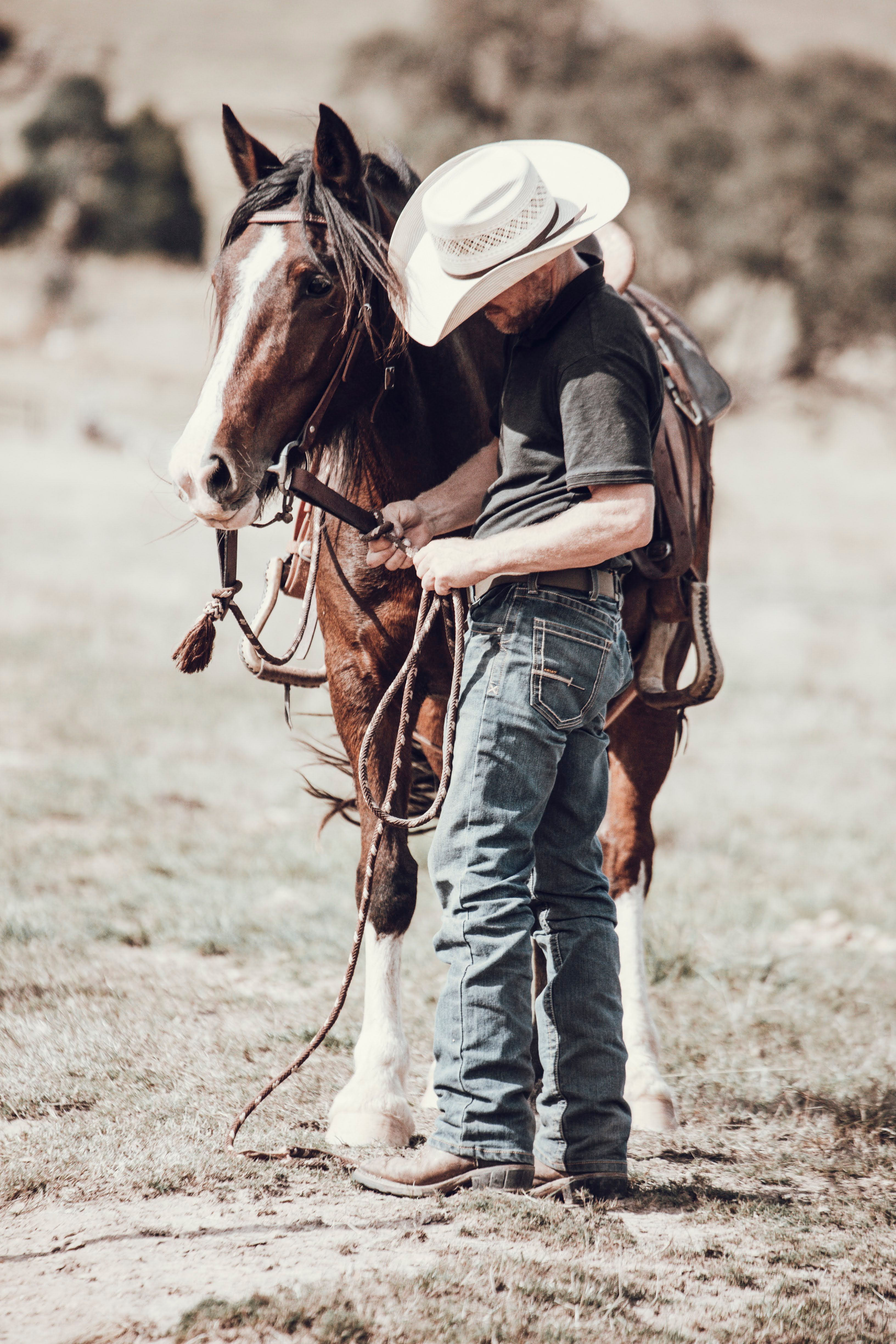
I've been fortunate to work with horses most of my life. Growing up, my cousin, Beau Purcell, ran Mount View Safaris, a 100-herd strong, horse trail riding business in the Victorian High Country. As a child, my job was to catch and saddle the horses before joining the safaris. Beau's daughters Trish, Bec and Kelly not only taught me how to ride but how to truly love and care for horses. Inspired by The Man from Snowy River, we spent countless days riding through the hills. By the age of twelve, I was leading trail rides solo. I didn't realise it then but those early experiences marked the beginning of a lifelong education in understanding horses.
At fifteen, I left school to work with local horse trainer Gerald Egan. I rode on the amateur jockey circuit before entering the world of rodeo where I travelled the country competing in bareback and bull riding events. I returned to racing to pursue a career as a jumps jockey but after a series of injuries and weight issues, at age 24 I began an apprenticeship as a farrier. By this point in my life, I'd spent most of it working with horses but they were about to teach me something far more significant than horsemanship.
During a period of deep personal struggle, I was carrying emotions I couldn't fully understand. For many years, I hid what I knew to be true about myself, and the weight of that became impossible to ignore.
The horses noticed long before I did.
I went from confidently working with horses that others couldn't reach to struggling with the quietest in the stable. At the time I saw it as a behaviour issue, but eventually I came to realise they weren't reacting to my techniques, nor were they simply "misbehaving". They were responding to what I was carrying emotionally.
Over the following decade, horses became my greatest teachers. They responded honestly to my emotional state, even when I tried to hide it. Through them, I learned that emotional awareness isn't optional, it's fundamental. As I changed, my relationship with horses changed and I came to realise that true horsemanship isn't about what we ask of the horse, it's about what we ask of ourselves.
My work is built on those lessons.
Today, my aim is to help people to develop greater self-awareness, emotional regulation and resilience through guided interactions with horses. Horses offer immediate, honest feedback, creating opportunities for people to recognise what they're feeling before those emotions become overwhelming. Horses help us to see ourselves more clearly. My role is to guide that process safely, respectfully and without judgement.
If you're ready to see what horses can teach you about yourself, get in touch.
Grounded in nervous system science
All sessions are ground-based, no riding. The work happens in the space between you and the horse: noticing, responding, and learning what your body already knows.
Horses are exquisitely attuned to the nervous system state of those around them. They respond not to what we say but to what we carry. That honest feedback, offered without judgment, creates a unique opportunity for self-discovery that is difficult to replicate in a room.
Initial
meet and greet
Relaxed and unhurried
No commitment required
Before committing to the program, we start with an hour together. It's relaxed and unhurried, a chance to meet the herd in the arena or out in their environment, talk through what's brought you here, and get a sense of what equine-assisted wellbeing actually looks and feels like in practice.
It's also a chance for us to work out if it's the right fit. We'll talk about what you're hoping to get from the sessions, what your expectations are, and whether this kind of work feels right for you. There's no pressure to commit to anything on the day.
A four-session
pilot program
Each session builds on the last, creating a safe arc from first contact with the herd through to integration and reflection.
Work with
our herd
Half day
Full day
Equus Salus is open to registered mental health practitioners who want to incorporate equine-assisted work into their practice but don't have access to horses or a suitable environment.
We provide the horses, a safe environment, and the equine expertise. You bring your clinical skills and your client relationship. Sessions are available per session, half day, or full day, with Paddy on hand to manage the horses and support the equine side of the work throughout.
If you are a registered mental health practitioner interested in working with our herd, get in touch to discuss how we can work together.
Before you get in touch
What does "Equus Salus" mean?
Equus is Latin for horse. Salus was the Roman goddess of health, safety and wellbeing, and the word itself carries that same meaning. Together, Equus Salus means something like wellbeing through horses: the safety, strength and sense of self this practice takes its name from.
What is equine-assisted counselling?
Equine-assisted counselling is talk-based counselling that includes guided, ground-based time with horses. You are not taught riding or horsemanship. What happens between you and the horse, and your own responses to it, becomes material to explore in session. At Equus Salus the work is trauma-informed and polyvagal-informed, and every session stays at ground level, alongside the horse rather than on it.
Do I need any experience with horses?
No experience with horses is needed. You do not need to know how to handle, lead or care for a horse. You are guided through everything, and each activity is matched to your comfort on the day. You set the pace, and you can spend a session simply observing the herd from outside the yard if that feels right.
Will I be riding the horses?
No. All sessions at Equus Salus are ground-based, which means everything happens at ground level, beside the horse rather than on it. There is no riding at any stage of the work. Working from the ground keeps the focus on connection, communication and nervous system regulation rather than on riding skill.
What happens in a first session?
The first session is a one-hour meet and greet. You spend time with the herd in the arena or their paddock, talk through what has brought you to counselling, and get a feel for how the work is done. There is no commitment to continue, and no pressure to decide anything on the day.
How can horses help with trauma recovery?
Horses are highly responsive to the state of the people around them, including breathing, movement and muscle tension. In session, that responsiveness offers immediate, non-verbal feedback that can help you notice and settle your own nervous system. The approach here is trauma-informed and polyvagal-informed. Research into equine-assisted work is still developing, and outcomes vary from person to person.
What does polyvagal-informed mean?
Polyvagal theory describes how the nervous system moves between states of safety, mobilisation and shutdown. A polyvagal-informed counsellor pays close attention to those states and works to support a felt sense of safety before anything else. In equine-assisted counselling, the horse's calm presence and the outdoor setting are used to support that regulation.
Where is Equus Salus, and how do I get there?
Equus Salus is on a rural property at Merrijig in the Victorian High Country, about 20 minutes east of Mansfield and roughly 45 minutes from Mount Buller. It is around a three-hour drive from Melbourne. The full address and directions are sent to you once a session is booked.
Is the property accessible for wheelchairs or other mobility aids?
The car park is hard gravel and the arena has a shallow sand surface. The property isn't formally set up for wheelchairs or other mobility aids, so if you use one and would like to check whether it will work for you, get in touch before you book.
What does it cost?
The first meet and greet is $80 for an hour. Program sessions run between 60 and 90 minutes and cost $120 to $150, depending on length. Counselling with a member of the Australian Counselling Association is not eligible for Medicare rebates. Some private health funds and NDIS plans do cover counselling, so it is worth checking your own cover before booking.
I feel nervous around horses. Is this still for me?
Feeling wary of horses is common and is not a barrier. The work is done at whatever distance feels manageable, and early sessions often happen with a fence between you and the herd. Nothing is forced. Noticing and working with that wariness can itself be a useful part of the counselling.
How many sessions will I need?
That varies from person to person. The usual starting point is the one-hour meet and greet, followed by the four-session program covering safety, regulation, boundaries and integration. Continuing beyond that is entirely your choice, and there is no need to commit to a set number of sessions in advance.
Still wondering about something? Get in touch and ask. You can also email enquiries@equussalus.com.au.
Take the first step.
Send a message if you're ready to talk, tick the box below if you'd just like to know when Equus Salus is taking bookings, or do both.
Merrijig, Victoria
20 minutes from Mansfield.
We acknowledge the Taungurung People, the Traditional Custodians of the land on which we live and work, and pay our respects to their Elders past and present.
We recognise the deep and continuing connection of Aboriginal and Torres Strait Islander peoples to Country, and the knowledge of land, animals, and healing that has been cared for here for over sixty thousand years. Always was, always will be Aboriginal land.